Monday, 14 December 2015
6 inch Samsung Galaxy A9 leaks in detail: Snapdragon 620 and a 4,000mah battery

Samsung Galaxy A9 will be joining the recently announced A3, A5, and A7 models of the refreshed Galaxy A (2016) lineup. The smartphone leaked via official promo pictures and is expected to go official later this month.

The Galaxy A9 is going to feature a 6" Super AMOLED screen of 1080p resolution and run on the Snapdragon 620 chipset with 3GB of RAM. The 620 platform offers a powerful octa-core 1.8GHz processor with 4x Cortex-A72 and 4x Cortex-A53 cores, while the GPU in charge of graphics is Adreno 510.

The Galaxy A9 will be following the trend established by the smaller A3, A5, and A7 from the 2016 lineup and will be built around a metal frame and dual 2.5D glass panels.

The rest of the specs of the Galaxy A9 include a 13MP rear camera with optical image stabilization and bright f/1.9 aperture. There is also an 8MP selfie snapper with support for panoramic pictures, 32GB expandable storage, LTE Cat.7 connectivity, and a 4,000 mAh battery.

With such a beefy juice pack, the Galaxy A9 is touted to feature power bank capabilities. Those should be supported natively by Android 6.0 Marshmallow, but the Galaxy A9 will be launching on 5.1.1 Lollipop, so we can't confirm this feature availability just yet.

Finally, the Galaxy A9 will support Samsung Pay and will feature a fingerprint scanner. It will be launching on Android 5.1.1 Lollipop, but a Marshmallow update is scheduled for the months post the release.

Samsung Galaxy A9 is expected to go official very soon and hit the stores around Christmas or in early January. The price in China will be north of CNY 3,000, which means more than €430.
Xiaomi launches Redmi Note Prime with 5.5-inch display, 3100mAh battery

After the Redmi 2 Prime, Xiaomi has launched its second made-in-India handset. Dubbed Redmi Note Prime, the device is powered by a Snapdragon 410 SoC with quad-core 1.2GHz CPU, and sports a 5.5-inch (720x1280 pixel resolution) IPS display.


Carrying an INR 8,499 (around $125) price tag, the handset is currently an Amazon India exclusive, with sales opening tomorrow morning. In addition, it's also listed on Mi.com.
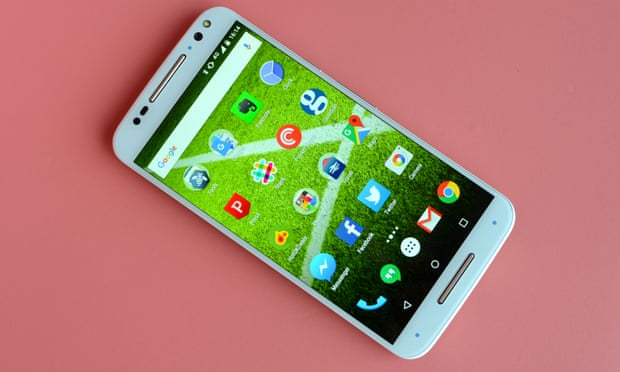
Moto X Style begins getting Android 6.0 update


Xiaomi Mi 5 seemingly has its front panel leaked

Over the past few days we've seen quite a few leaks regarding the upcoming Xiaomi Mi 5, the flagship smartphone that the company's CEO says is "worth waiting for". Not one, but two different renders claiming to show the Mi 5
have surfaced, and yet they aren't identical. Today the plot thickens,
since we allegedly get a leak of the phone's front panel.
Once again that much-rumored physical Home button seems to be confirmed, here in the form of a cutout in the front panel. This button will incorporate a fingerprint scanner, as otherwise Xiaomi could have just kept its traditional capacitive button layout.

The corners of the Mi 5 will be rounded as you can see, and the design of this panel happens to align nicely to that of the handset depicted in yesterday's leaked render (though that oddly did not feature the Mi logo on the front). What you can see below is the back of the front panel, with all of its connectors.

The Mi 5 has been rumored to sport a 5" or 5.2" touchscreen, and it might have 1080p resolution. It should be powered by Qualcomm's upcoming Snapdragon 820 chipset, and could also get 4GB of RAM, a 16 MP rear camera, an 8 MP selfie shooter, and a USB Type-C port. It is probably going to feature a full metal construction, launching with Android 6.0 Marshmallow on board underneath the latest iteration of Xiaomi's MIUI. As for color options, it's expected to come in three of those: silver, gold, and rose gold.
Once again that much-rumored physical Home button seems to be confirmed, here in the form of a cutout in the front panel. This button will incorporate a fingerprint scanner, as otherwise Xiaomi could have just kept its traditional capacitive button layout.
The corners of the Mi 5 will be rounded as you can see, and the design of this panel happens to align nicely to that of the handset depicted in yesterday's leaked render (though that oddly did not feature the Mi logo on the front). What you can see below is the back of the front panel, with all of its connectors.
The Mi 5 has been rumored to sport a 5" or 5.2" touchscreen, and it might have 1080p resolution. It should be powered by Qualcomm's upcoming Snapdragon 820 chipset, and could also get 4GB of RAM, a 16 MP rear camera, an 8 MP selfie shooter, and a USB Type-C port. It is probably going to feature a full metal construction, launching with Android 6.0 Marshmallow on board underneath the latest iteration of Xiaomi's MIUI. As for color options, it's expected to come in three of those: silver, gold, and rose gold.
Alleged leaks of Galaxy S7 hardware chassis


Though, just as with any leak, we can’t say for sure that this is actually the Galaxy S7, for all we know it could be one many smartphone manufacturers making a similar looking phone.

The photos show a wrap-around metal border design - something that we will probably keep seeing for at least another couple of years.

We expect the Galaxy S7 to be announced in February with a February or March launch. The S7 is also to come with a 5.1 inch Super AMOLED display with a 1440p resolution, Android Marshmallow, Gorilla Glass 5, and either an Exynos 8890 chip or a Snapdragon 820 chipset.
Next-gen Huawei-made Nexus tipped to come with a Snapdragon 820

We're all about Snapdragon 820 today. After we told you about a potential Lumia that may utilize Qualcomm's flagship chipset for next year, and benchmark scores revealed the SoC to be a top performer, we're now learning that it may be featured in the 2016 Nexus smartphone, again made by Huawei.
The Chinese heavyweight has only made a single Nexus - this year's Nexus 6P, but the rumor goes that Google will be partnering with it for at least another year. And if the Snapdragon 820 is every bit as powerful as initial reports suggest, it's only natural for it to be the chosen one to do the job.

The info comes from Chinese electronics industry analyst Pan Jiutang, and he's putting Huawei in a list along with other big names like Samsung, Sony, LG, and Motorola, who will be outfitting devices with the S820.
Apparently, Google isn't a fan of Huawei's in-house top-end solution, the Kirin 950, which Huawei uses in the recently announced Mate 8.
Naturally, it's too early to consider this information final, and the ongoing hype around the Snapdragon 820 might have gotten people overly excited. That said, the chip remains the most logical solution for a Google flagship in 2016.
Wednesday, 11 November 2015
Smartwatch-targeted Cortex-A35 is faster, more power-efficient than Cortex-A7

Everyone expects the Cortex-A72 chipsets to hit the market and break mobile performance barriers, but ARM has designed a core to serve the other side of the market – the low-power Cortex-A35.
Let's be clear – low-power here is about energy efficiency, at 1GHZ the A35 will draw just 90mW per core. It will be fast though, promising on average of 20% performance increase over the Cortex-A7 in 32-bit workloads.
The Cortex-A35 is an ARMv8-A core though, meaning it supports 64-bit software and has built-in encryption support.
Compared to the current 64-bit, low-power core of choice, the Cortex-A53, the new core will use 33% less power and will be cheaper since it occupies 25% less silicon. There's no word on the performance difference though.
ARM expects its partners to start shipping Cortex-A35 chipsets in late 2016 so it will be a while. Even in that late timeframe the cores will be built on the aging 28nm process, which will keep cost down but the power savings could have been much bigger.

MediaTek executive vice president and co-COO Jeffrey Ju was quoted "The ARM Cortex-A35 processor is welcomed by MediaTek for its scalability of the ARMv8-A architecture, which will enable us to continue to provide efficient and highly integrated 64-bit SoCs to global markets."
While multi-tiered chipsets will certainly benefit from the A35 (big.MEDIUM.LITTLE?), smartwatches will be quick to adopt the new core. Currently they use the old Cortex-A7 in Snapdragon 400 and MT2601.
Exynos 8890 enters mass production, January unveil for the Galaxy S7 likely

In spite of the expectations that the Exynos 8890 chip will hit mass production in December, the latest rumor from South Korea suggests Samsung has already begun making its next greatest chip.
If true, Samsung would have the opportunity to ship the Galaxy S7 in February, following an official unveil in January. The company is certainly going to rely on a Snapdragon 820 variant as well, in addition to a rumored Exynos 7422, originally thought to star in the Note5.
According to another piece of online gossip, Samsung will ship as many Exynos 8890-powered Galaxy S7 smartphones as it will Snapdragon 820 ones. Previously, the company preferred its in-house chipset solution to Qualcomm's due to Snapdragon 810's overheating issues.
As you might already know, the Exynos 8890, also known by its codenames M1 or Mongoose, is going to be the first Samsung-made one to feature custom CPU cores.
Qualcomm's Snapdragon 820 chipset finally gets fully revealed

Qualcomm has been drip feeding us information about the Snapdragon 820 chipset ever since March. Today though it's thankfully decided it's time to finally fully reveal that SoC's specs. This obviously means we're getting closer and closer to seeing the Snapdragon 820 in actual shipping devices, even if the company insists that won't happen until 2016.
The Snapdragon 820, as you may know, marks Qualcomm's return to custom-designed CPU cores, something it has done a lot of in the past but chose not to with the Snapdragon 810 - where it simply used ARM designs.
The Snapdragon 820 comes with a quad-core CPU with 64-bit Kryo cores, which can be clocked at up to 2.2 GHz. The CPU is said to have twice the performance of the one in the Snapdragon 810, which is quite a feat for just a one-generation leap. The same improvement is quoted when it comes to "efficiency", which makes us think that the S820 will have better battery life compared to its predecessor. This will apparently also happen thanks to the new Hexagon 680 DSP.
In terms of graphics the Adreno 530 GPU is used, which has already been detailed in August. It's said to come with a 40% improvement to graphics performance, compute capabilities, and power usage when compared to the Adreno 430 from the S810.

When it comes to connectivity, because of its X12 LTE modem, the S820 supports Cat.12 LTE downloads (with 600Mbps peaks) and Cat.13 uploads (with 150Mbps peaks), tri-carrier aggregation for downloads and two-carrier aggregation for uploads. In terms of technologies supported, there's FDD and TDD for LTE, DB-DC-HSDPA, DC-HSUPA, TD-SCDMA, EV-DO and CDMA 1x, as well as GSM/EDGE. LTE/Wi-Fi link aggregation is in too, as is support for LTE-U, LTE Broadcast, dual-SIM, VoLTE, and Wi-Fi calling.
The Wi-Fi part of the chip gets support for 2x2 MU-MIMO 802.11ac connections, which is the fastest currently available option. Of course, you still need a wireless router with MU-MIMO support, and there aren't a lot of those yet - but you do get some future-proofing, that's for sure.
4K displays are supported by the S820, along with up to 28MP cameras through the new 14-bit dual-ISP. The chipset also works with UFS 2.0 or eMMC 5.1 flash storage, LPDDR4 1866MHz dual-channel memory, USB 3.0 or 2.0, and NFC. Qualcomm Quick Charge 3.0 is four times faster than conventional charging and 38% faster than Quick Charge 2.0.
The Snapdragon 820 will be manufactured on the 14nm FinFET process, as previously rumored. You should obviously expect to see this chip inside most (if not all) of next year's Android flagship smartphones.
Upcoming vivo X6 spotted in a PR shot


Today brings a new glimpse of the X6 in a PR shot, posted by Harper’s Bazaar magazine on its official Weibo page. We can't really be sure if the appearance of the X6 was intentional or some slip-up, but it is an odd way to spot a handset for the first time (still, we've seen a lot weirder).
The shot suggests that the vivo X6 is going to a Victoria's Secret show, as evident by the pair of backstage passes and by design or not, we can also be fairly sure that it is the X6 in the picture, firstly because of the back-mounted fingerprint sensor, which no other vivo currently has. Then there is also the matter that the Weibo post itself comes from a vivo X6.

Tuesday, 10 November 2015
Best custom rom for REDMI 1S (SUPER SMOOTH AND SUPER STABLE WITH AMAZING BATTERY LIFE)

I know beta releases of android marshmallow are out for the redmi 1S ,But hands down the best rom till date is paranoid android Build 6. I know build 7 is available but i felt it was a bit buggy at times so i sticked to Build 6 .Now you may have your own opinions about this but just hear me out i have tested nearly all roms for the redmi 1s like ASOP,CM 12,CM 12.1,CM 11, Temasek, Resurrection Remix,PAC-ROM,crDroid,Carbon and countless others you can check all of them out over HERE. Every rom that i had tested had some or the other thing that made to switch to other roms like sound distortion,buggyness,automatic reboots,battery life,heating issues etc.So when PA rom had released for the redmi 1s I had tested it out and also had made a post about a earlier on this blog. Initial releases had some bugs here and there but my GOD this rom is just awesome and can recommend this rom to any redmi 1s user ,As this rom is simple yet has may interesting needed features with are going to be used and not something that you may never be even touched the first place.This is super smooth, Batter life is just amazing at times i easily get around 4 hours on screen time on my daily use till the battery dies out.This rom is bug free and just makes the redmi 1s performs like a beast like any other mid to high end android phones and has been my go to custom rom after testing other custom roms out
The only bug which is found on this rom is the camera bug which is found on all of the AOSP rom for the redmi 1s but it can be fixed by flashing a custom kernel like XCELERATE kernel which is linked down below
BUILD LOGS (IF INTESTED)
BUILD 1
- Merge of android-5.1.1_r2 tag from AOSP
- Theme Engine support from CM-12.1 - Screenshot fixes (NPE and leaks)
- Cellular Networks migration (accessible through main settings now)
- MultiSIM support
- Mute notification sounds threshold
- ParanoidOTA revamp with Material update
- Status Bar’s Double Tap to Sleep
- Misc Bug Fixes
- Theme Engine support from CM-12.1 - Screenshot fixes (NPE and leaks)
- Cellular Networks migration (accessible through main settings now)
- MultiSIM support
- Mute notification sounds threshold
- ParanoidOTA revamp with Material update
- Status Bar’s Double Tap to Sleep
- Misc Bug Fixes
BUILD 2
- MSIM: Fix issues
- MSIM: Ability to hide empty sim card notifications
- Sound: connect/disconnect notification support (with ability to specify tone)
- Add option to disable search bar on recents
- Heads Up snooze (swipe up on a heads up notification initiates this)
- Change default mode of AppOps to make it more reliable
- Misc Bug Fixes
- Language translations (Thank you to our great Translators!)
- ParanoidOTA: fix inability to download OTAs
- M8 & Sirius: Enabled QuickBoot
- MSIM: Fix issues
- MSIM: Ability to hide empty sim card notifications
- Sound: connect/disconnect notification support (with ability to specify tone)
- Add option to disable search bar on recents
- Heads Up snooze (swipe up on a heads up notification initiates this)
- Change default mode of AppOps to make it more reliable
- Misc Bug Fixes
- Language translations (Thank you to our great Translators!)
- ParanoidOTA: fix inability to download OTAs
- M8 & Sirius: Enabled QuickBoot
BUILD 3
- MSIM: Fix FC's issues
- Wake on plug
- Home button wake
- Theme Engine bug fixes
- Volume Panel enhancements
- Low-level optimizations to our core base
- Loads of bug fixes for several NPEs, ANRs and OOMs.
- Wake on plug
- Home button wake
- Theme Engine bug fixes
- Volume Panel enhancements
- Low-level optimizations to our core base
- Loads of bug fixes for several NPEs, ANRs and OOMs.
BUILD 4
- Added Immersive Mode
- QS Reorder
- Many Bug Fixes
- QS Reorder
- Many Bug Fixes
BUILD 5
- Immersive mode QS detail panel clean up.
- QS reorder reset button is now either on Settings/Backup and Reset or long pressing the settings wheel in statusbar header
- Screen unpinning fixed on devices with hardware buttons.
- Volume Panel tweaks.
- Volume Key Controls Settings
- New Settings Cellular drawable
- Fixes to the status bar battery icon
- Much more
- QS reorder reset button is now either on Settings/Backup and Reset or long pressing the settings wheel in statusbar header
- Screen unpinning fixed on devices with hardware buttons.
- Volume Panel tweaks.
- Volume Key Controls Settings
- New Settings Cellular drawable
- Fixes to the status bar battery icon
- Much more
BUILD 6
- Added Live Display
- Many Bug Fixes
- Many Bug Fixes
BUILD 7
- Many Bug Fixes
FLASHING INSTRUCTIONS
- Flash custom recovery (if not flashed previously)
- Wipe Data / Factory reset
- Flash PA Zip
- Flash GApps
- Wipe Data / Factory reset
- Flash PA Zip
- Flash GApps
- Flash custom recovery
- Flash SuperSU Zip (if you need root access)
- Flash SuperSU Zip (if you need root access)
- Reboot
BATTERY STATS


NEED ANY HELP JUST COMMENT DOWN IN THE DESCRIPTION
How to get 200rs mobile recharge using ladooo app (7 EASY STEPS)[LIMITED TIME OFFER]

Ladooo the free mobile recharge app is offering 200rs recharge for just referring to 7 people who are still not registered to the ladooo app and that easy as it is.
STEP 1
Download the Ladooo app from the google play store : LINK

STEP 2
Register yourself to the app if you are still not registered
STEP 3
Now go to the button like the one which is shown below "GET Rs.200"

STEP 4
Now You can do two things

1: Share your ladooo referral code
2: Share it though whats app
(I recommend using whats app as it is the most convenient way)
STEP 5
After the getting 7 people registered on Ladooo you will get your 200rs mobile recharge
STEP 6
After getting your 200rs in your Ladooo wallet now tap on the wallet and you will be shown this

STEP 7
Now just enter your number and choose your carrier (vodafone,idea,etc) and Tick the FREE if not ticked and and tap on recharge NOW and THAT'S IT YOU GOT YOUR SELF A FREE 200rs RECHARGE
NOTE: For those who are skeptical about the app Ladooo. I have used this app a lot of times and i have got several mobile recharges with this app alone.
THIS IS A LIMITED TIME OFFER SO HURRY UP AND MAKE THE BEST USE OUT OF IT
IF YOU GUYS NEED ANY HELP JUST COMMENT IN THE COMMENT SECTION BELOW
Saturday, 7 November 2015
Huawei's upcoming Mate 8 will be powered by newly-announced Kirin 950 SoC

Shortly after making official the Kirin 950 SoC, Huawei has confirmed that its upcoming Mate 8 smartphone will be powered by the latest chipset. The confirmation came in the form of a teaser image (shown below).

As for the Mate 8, the flagship is expected to be made official on November 26. And from what has been leaked now, it will sport a 1080p 6-inch display, come with 4GB RAM and 64GB internal memory, and feature a 16MP/8MP camera combo.
Friday, 6 November 2015
Google plans on attempting to end fragmentation in Android by controlling the hardware

Fragmentation in Android is a huge problem. Fixing fragmentation was a big part of it. Google agrees and plans on fixing the situation by co-developing new chips and other sensors.
Google has reportedly talked to some microchip makers about developing chips based on Google’s own preferred designs. The main reason for this is to make Android a little bit more like iOS. They figure that if they can control the hardware and the software, Android will be a much simpler OS to update and keep control of.
In theory, it should work pretty well, Apple is doing a great job at it. However, Android has many other manufactures using it, while Apple is the only one using iOS. I’m sure any sort of effort to uniform the updating process will be beneficial to Android users, but I just don’t see it ever being as easy as how Apple makes it seem.
Marshmallow enters Google's Android distribution chart for the first time

Back in September Lollipop finally went past 20% in Google's monthly Android distribution chart, and now, with the latest iteration of the report, Marshmallow is making its debut.
Hopefully you weren't expecting the latest version of the OS to have a big impact already in terms of market share. Because it doesn't. It currently sits at 0.3%, which is just 0.1% past Froyo, a very, very old iteration of Android.

But the good news is that it's there. And it can only go up from here, once more and more Android device makers start rolling out Marshmallow updates.
Lollipop climbed to 25.6% of the market this month, a gain of more than 2% compared to the October data. Meanwhile, KitKat dropped to 37.8% from 38.9%, and Jelly Bean is now at 29% (down 1.2% from last month). The three oldest Android versions in the chart haven't seen much action over the past few weeks, with Gingerbread and Froyo still stuck at 3.8% and 0.2%, respectively, as Ice Cream Sandwich dropped a mere 0.1%.
Older iterations of Android aren't part of the report because it uses data from the new Play Store app, which only works on Froyo or later.
Gionee teases the Elife S6 ahead of its November 16 unveiling

Today though the Chinese company has decided to continue its teaser campaign. And, thankfully, this time around we are given a few glimpses at the smartphone's design.
The announcement is still scheduled for November 16. The device seems to be made out of metal, and a gold version will surely be available.

Based on the images, it looks like the Elife S6 actually has the model number GN9010. A Gionee handset with that designation passed through TENAA a few weeks ago, with a back that looks identical to what we see in these teasers.
If the GN9010 and the Elife S6 are one and the same, then expect to see a 5.5-inch 720p AMOLED touchscreen, a 13 MP rear camera with LED flash, a 5 MP selfie shooter, a 1.3 GHz octa-core CPU, 2GB of RAM, 16GB of expandable storage, 4G LTE, and a 3,150 mAh battery. It should run Android 5.1 Lollipop. The dimensions are 151.9 x 74.6 x 6.9 mm, and it weighs 145.2g.
On paper, it seems identical to the Elife S Plus that got official in India a few days ago, except for two things - the design and the amount of RAM. The Elife S Plus has 3GB of RAM, and it looks different too.
Lenovo planning a September 2016 Marshmallow update for the K3 Note

Lenovo's Android update tracker has just been updated to give a timeframe when specific devices will be receiving Marshmallow, if at all. To quickly clear the air - hugely popular devices like the K3 Note and A7000/A7000 Plus will indeed be graced with an Android M firmware, just not particularly soon.
Okay, that might have been an understatement. All three models are listed for a Marshmallow release in September 2016, when Google will be gearing up to launch Android N, in all likelihood.

It's the smartphones' budget nature that may be to blame, as models up the lineup will be updated sooner. The yet-to-be-released Vibe S1 and the Vibe P1 that recently hit the shelves will get Android M in June 2016.
As of now, these 5 devices are the only ones with a confirmed Marshmallow update, the current flagship Vibe Z2 Pro (albeit a last-year model) will remain on 5.0 Lollipop for the time being.
Strategy Analytics: Tizen overtakes BB OS for fourth place

It seems that the freefall of the Canadians continues and now Tizen occupies the fourth place, according to Strategy Analytics.
Tizen has the advantage of being backed by smartphone giant Samsung, which has been expanding its Tizen portfolio. Much more than its Windows lineup, which has essentially been abandoned.
Tizen has found a niche in the budget segment in India where it's second behind Android. The OS also powers Samsung's latest Gear S2 smartwatches and select smart TVs.

Anyway, that's not great news for the RIM guys, but it does explain the recent jump to Android with the new BlackBerry Priv.
Android itself took a small hit, as did Windows, only iOS rose. Even Firefox OS, which accounts for a tiny sliver of the market declined.
The Kirin 950 SoC goes official, posts a record AnTuTu score

It appears that the rumor mill got everything right and there are no real surprises in the hardware. The Kirin 950 is an impressive chip indeed, manufactured using a 16nm FinFET process and utilizes flip transistors. The latter entails building transistors vertically, instead of just horizontally, which equates to less power consumption. In fact, Huawei promises a 40% increase in performance and 60% decrease in power needs.

As for the architecture inside the Kirin 950, it is an octa-core CPU, utilizing four high-power Cortex-A72 cores, clocked at up to 2.53 GHz and an additional four power-saving Cortex-A53 ones, working at 1.8 GHz. They are configured in a big.LITTLE setup, providing a lot of flexibility between power and battery consumption on the fly. The Kirin 950 also has a small i5 co-processor, which is always on and helps the device stay constantly aware of its surroundings by monitoring various sensors. It is also a huge improvement over the second-generation i3 chip with power usage brought down from 90 mA all the way to 6.5 mA.

The Kirin 950 also shows great promise in the graphics department. It is equipped with a high-end Mali T880MP4 GPU, said to be twice better in terms of performance, compared to the Mali T880 inside the Kirin 930. Network connectivity is covered by a Cat. 6 LTE, which voice calls should also benefit from, considering Huawei's new push towards VoLTE. The technology reportedly doubles the audio frequency range and significantly slashes latency.

It is still too early to expect proper performance figures for the Kirin 950, especially before it appears in an end-user device. Still Huawei did show off a stellar test score of almost 83 000 points on AnTuTu with a demo rig. That's easily the highest we've seen from any device so far and means the upcoming Huawei Mate 8 will have some proper power underneath its hood.

Subscribe to:
Posts
(
Atom
)